In Flanders Fields Song CD & Poem
Lesson Plans, Sheet Music, Video
Why do poppies grow in Flanders Fields?
What happened at Flanders Fields?
What is the story of In Flanders Fields, the poem?
Where is Flanders Fields located?
What are the words to Flanders Fields poem?
Students, teachers and educators have been reviewing these and other questions for over nine decades to explore the story, the meaning, the message and the history behind John McCrae’s In Flanders Fields poem, the most famous and beloved of all Remembrance Day poems and war memorial poems.
2008 marked the 90th anniversary of the death of Lieutenant Colonel John McCrae. The year also marked the 90th anniversary of the end of the First World War.
The In Flanders Fields Song and the FLANDERS FIELDS Educational Kit – 6 Lesson Plans for Teachers were created to commemorate both, paying tribute to our veterans and signifying our commitment to the memory of all fallen soldiers and a recommitment to Remembrance and global peace.
Explore the Story Behind the World’s Most Beloved
War Memorial Poem - In Flanders Fields
How did John McCrae come to write the In Flanders Fields poem? What experiences and events prompted McCrae to write this war memorial poem while still at the battlefront? How did the Flanders Fields poem manage to get published? How was the poem used during the war and after the war?
Discover the Story Behind Creating The Music
For the In Flanders Fields Song
What inspired composer Anthony Hutchcroft to compose the music for the Flanders Fields Song? What compositional elements were used to interpret the imagery and contrast of John McCrae’s In Flanders Fields poem? How did the composer reflect John McCrae’s Scottish heritage and military background in the music?
The In Flanders Fields Song is available on CD or as an MP3 download.
FLANDERS FIELDS Educational Kit - 6 Lesson Plans for Teachers
Brings Everything Together In One Complete Package
The Educational Kit includes a vocal version and a Karaoke version of the Flanders Fields song plus a copy of the Flanders Fields poem, the piano/vocal sheet music and the 6 Lesson Plans for teachers including:
The story of how John McCrae came to write the In Flanders Fields poem
In Flanders Fields poem analysis
The connection between Flanders Fields poem, poppies and Remembrance
Who was John McCrae?
The Story Behind the Flanders Fields music
Analysis of the Flanders Fields music & song
The Flanders Fields Lesson Plans were created to help teachers and educators engage their students in Remembrance Day activities and are designed as social studies curriculum support for grade school students.
The Flanders Fields Educational Kit can be purchased online through this website.
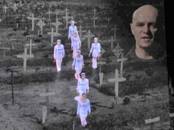
The inspiration behind the haunting In Flanders Fields music video was taken from the black and white photo of crosses “row on row” in Essex Farm Cemetery, where John McCrae’s friend Alexis Helmer was buried the day before McCrae composed the In Flanders Fields poem.
The photograph of Essex Farm Cemetery was reportedly taken shortly after the end of WWI and this Remembrance Day video offers a visual representation of the stark imagery utilized by John McCrae in his In Flanders Fields poem.
The In Flanders Fields video can be purchased online through this website.
Explore the Fascinating Life and Accomplishments of
Lieutenant Colonel John McCrae
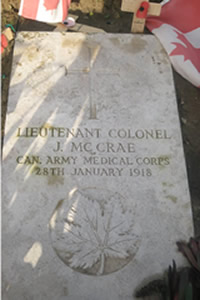
John McCrae was born in Guelph Ontario on November 30, 1872 and succumbed to pneumonia and meningitis in France on January 28th, 1918 while serving active duty during World War I. Although mostly recognized as the author of the In Flanders Fields poem, in his short life there were many other John McCrae accomplishments; as a physician, teacher, author, poet, soldier and military leader.
Exactly what was the significance of the First World War?
Along with a WWI Chronology and WWI Statistics, you’ll find a brief outline of WWI from the Serbian & Austro-Hungarian conflict and the assassination of Archduke Franz Ferdinand to the Armistice Day treaty of November 11th, 1918. Some of the areas covered include the countries involved in WWI, alliances, the Christmas Truce and the military firsts that made WWI a new kind of war.
Contact the Author
For more information about the materials available through flandersfieldsmusic.com or to contact the author Email: info@flandersfieldsmusic.com

 Explore the Story Behind the World’s Most Beloved
  The story of how John McCrae came to write the In Flanders Fields poem
  The inspiration behind the haunting In Flanders Fields music video was taken from the black and white photo of crosses “row on row” in Essex Farm Cemetery, where John McCrae’s friend Alexis Helmer was buried the day before McCrae composed the In Flanders Fields poem.
  Along with a