Buy Flanders Fields Music Video Now
Story Behind In Flanders Fields Music Video
IN FLANDERS FIELDS SONG
Music Video – View it on Youtube
© 2007 Anthony Hutchcroft
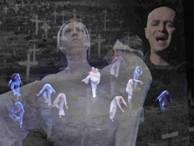
The inspiration for the In Flanders Fields music video came from the composer’s wife Lee Kwidzinski, who is also the video’s director and dance choreographer.
Kwidzinski fell in love with the In Flanders Fields song and found her inspiration for the choreography from the opening image of the music video, a 1917 black and white photo of crosses “row on row” in Essex Farm Cemetery, where John McCrae buried his close friend Alexis Helmer the day before McCrae wrote his famous In Flanders Fields poem.
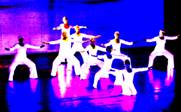 |
Photo: Rick Skerry |
Throughout the In Flanders Fields music video, especially in the opening and closing sequences, the central theme utilized is the image of the cross.
Kwidzinski chose “white” costuming because she wanted the dancers to be symbolic of the “row on row” of white crosses. She also opens (and closes) the Flanders Fields video with the camera above the dancers in order to give the same perspective as the image in the photograph.
The effect on the music video is a haunting, ghostly image that many viewers have interpreted to be angels or spirits of the fallen walking among the crosses of the graveyard In Flanders Fields.
In his In Flanders Fields poem, John McCrae’s use of imagery has since become a part of our collective memory of war. It is this “visual” aspect of the poem that Kwidzinski wanted to capture in her choreography.
Buy Flanders Fields Music Video Now
As you view the In Flanders Fields music video, watch for some of these images depicted by the dancers:
- “row on row” (of crosses)
- “the guns below”
- “loved and were loved”
- “take up our quarrel”
- “the torch be yours to hold it high”
In order to prepare for the Flanders Fields video, Kwidzinski shared photos, WWI facts and stories with her dancers to give them a clear understanding of what war might have been like and what the soldiers might have gone through.
In the first verse of the In Flanders Fields music video, Kwidzinski wanted to clearly establish the theme of the cross.
The music video’s second verse depicts the tragedy of war, the darker side where the young soldiers become the “unsettled dead” after being drawn into a war that they may not have understood.
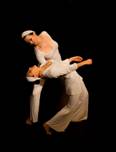 |
Photo: Rick Skerry |
The third verse of the In Flanders Fields music video interprets the battle. The dancers in the semi-circle (standing behind the two fighters) are symbolic of the young soldiers involved in a war without fully understanding why or what they are meant to do…watching the fighting at first, until they are finally drawn in as part of the battle. The soldiers eventually have to carry their own wounded or dead and bear the burden of being the ones that “survived”.
While nearly all of the dancers for the In Flanders Fields music video were familiar with the In Flanders Fields poem and remember reciting the memorial poem at school, they commented afterwards that this was the first time they had thought about the meaning of words or actually remembered the words to John McCrae’s In Flanders Fields poem.
Buy Flanders Fields Music Video Now
It was for this very reason that composer Anthony Hutchcroft created the In Flanders Fields Song.
Purchase the Flanders Fields Music Video for Your School
Since its release, this In Flanders Fields music video has been utilized by schools and educators across the nation as part of their Remembrance Day activities and ceremonies. Add this Flanders Fields music video to your collection of Remembrance Day videos.
“WOW!!! This is incredibly moving.
I showed it to my secretary and office assistant and we all were teary-eyed.
Can you tell me how I can get a copy of the video to show at our Remembrance Day ceremony?”
Ken H. (Victoria, BC)
“I was very impressed with how well the music blended with the poem.
The essence of the poem was certainly kept intact with this composition.
I have been to Flanders Field and believe strongly we need to keep this poem
and all that it stands for very much in the minds and memory of our young people.
I would like to be able to show the video to the students at our school.”
Lewis I. (Nova Scotia)
“My husband teaches Grade One and thought (the Flanders Fields music video)
would be an excellent piece to use for his class next year for Remembrance Day”
Sharlene M. (Abbotsford, BC)
“I am so thrilled to have the copy for use at my school
and I have been raving about it to a fine arts teacher friend of mine
who would love to buy a copy of the DVD In Flanders Fields".
Carmelita R. (Hammonds Plains, Nova Scotia)
BUY Flanders Fields Music Video!
Only $25.00 (Canada)
$30.00
(US & Other Countries)
(Includes shipping)
Others around the globe have created their own video interpretation of Anthony Hutchroft’s In Flanders Fields song including a Remembrance Day tribute by BNN, Canada’s Business News Network.
Here are two other Flanders Fields music video examples:
View Flanders Fields Video #2
Video interpretation by “nonpareils”
of Anthony Hutchcroft’s instrumental version of the
FLANDERS FIELDS SONG
View Flanders Fields Video #3
Video interpretation by Belgium’s “swijski”
of Anthony Hutchcroft’s vocal version of the
FLANDERS FIELDS SONG
“Visit the Flanders Fields CD page to purchase the In Flanders Fields song.
You can also purchase Flanders Fields Sheet Music
in Piano/Vocal or SATB Choir arrangement.
Contact the Author
Please Email Flanders Fields Music for more information about:
Flanders Fields Song
Flanders Fields Sheet Music
Flanders Fields Educational Kit – 6 Lesson Plans for Teachers
© 2011 Flanders Fields Music |